
We will go through all the stages of construction
4593 Morehouse Drive Pequot Lakes, MN
info@dottybrothers.com
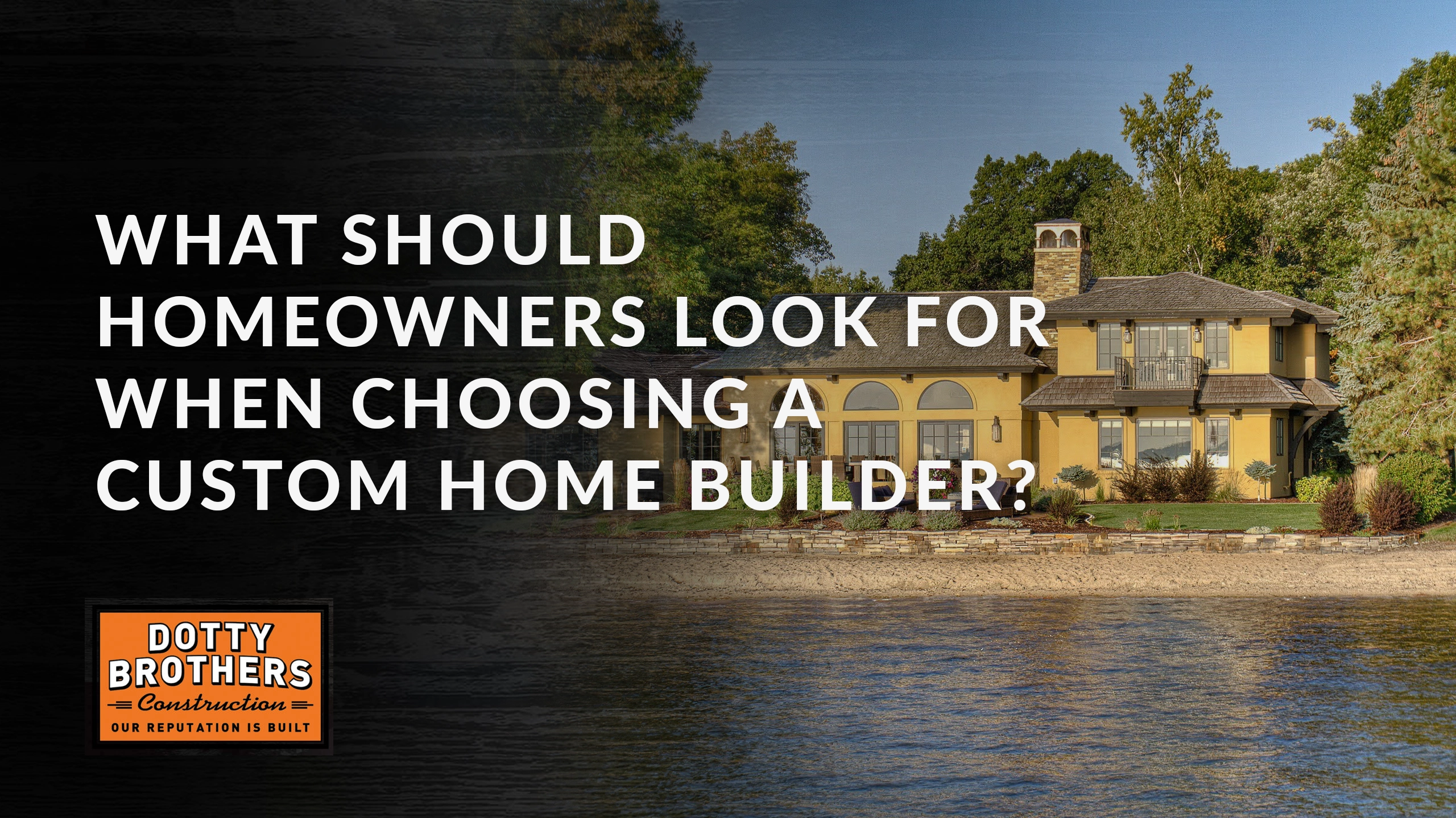

Building a custom home is one of the biggest decisions you'll ever make. Unlike buying an existing house, building from scratch means every choice — from the lot you choose to the trim on your cabinets — is yours to make. That's exciting.
But it also means the builder you choose will shape your entire experience. A great builder makes the journey feel fun, organized, and worth every penny. Alternatively, working with the wrong builder can lead to avoidable stress, delays, and unexpected expenses. So how do you know who to trust? Here's what to look for.
If you're a Twin Cities homeowner dreaming about a future lake home in the Brainerd Lakes area, or any of Minnesota's most beloved recreational communities, this guide is for you. The stakes are high, but knowing what to look for gives you a serious edge.
Building a lake home near Nisswa, Pequot Lakes, or other city in the Brainerd lakes area looks and feels very differently than custom home construction in the Twin Cities metro area. Local experience isn't just about familiarity with the landscape; it's about knowing the permit timelines, soil conditions, setback rules, and subcontractors (just to start!).
A builder with deep roots in a specific region brings relationships with trusted local vendors, awareness of regional code quirks, and a track record you can actually verify.
Not all home builders have the depth of local knowledge to back up their bids. Ask any builder you're considering: How many homes have you built in this specific area? Can I talk to past clients who built near a lake or in a rural setting? The answers will tell you a lot.
The truth about building a custom home is that problems will come up. Weather delays, material backorders, and design changes are all part of the process. What separates a great building experience from a terrible one isn't the absence of problems. It's how your builder communicates when problems happen.
Look for a builder who uses a client-facing online portal or project management tool so you can check in on your home's progress anytime. At Dotty Brothers Construction, we use Buildertrend so clients have access to detailed schedules, daily work logs, material selections, and job updates all in one place. That kind of transparency isn't a luxury; it's a sign that your builder respects your time and your investment.
During your initial consultations, pay attention to how quickly a builder responds to your calls and emails. If they're slow to respond before you've signed a contract, what happens once they have your deposit?
Dotty Brothers partners with experienced local architects who specialize in custom lake homes in the Brainerd Lakes area, ensuring every project begins with a design professional who truly understands the region, landscape, and the way lake homes need to live and function.
This collaborative model gives homeowners flexibility without sacrificing cohesion. If you already have an architect, Dotty Brothers is happy to work with them. If you don’t, we'll connect you with trusted professionals who match your style, budget, and project goals. Once the architectural design is complete, our in‑house draftsmen step in to develop detailed construction drawings and finalize the build‑ready plans.
That handoff is where our process really shines. Because the drafting team works directly with the construction team, there’s no confusion about intent, no “architect vs. builder” tension, and no gaps in accountability. Everyone is aligned from the start, which leads to clearer decisions, more accurate budgeting, and a smoother build.
When interviewing builders, ask: Who creates the architectural plans? Who produces the construction drawings? How do you ensure the design and build teams stay aligned? The answers will reveal whether the builder has a truly integrated process — or if you’ll be left managing the gaps yourself.
Great craftsmanship isn't just about beautiful photos on a website. It's about the quality of the materials, skill of the crew, and attention to detail on things most people never even notice — the way a door seals, the smoothness of the drywall finish, and the precision of a custom tile layout. These details are what make a custom home feel genuinely custom.
The best way to verify craftsmanship is to tour completed homes. Any reputable custom builder should be happy to walk you through past projects. Look at the trim work, the cabinetry, and the transitions between materials. Ask the homeowners directly: Are you happy with it? Would you build with this team again?
For a lake home in particular, craftsmanship has real stakes beyond aesthetics. A Minnesota lake property faces hard winters, freeze-thaw cycles, moisture from the water, and UV exposure during summers. Poor construction techniques or cheap materials in that environment don't just look bad; they could fail prematurely and cost you money.
Look for a builder who employs experienced craftspeople directly, rather than relying entirely on rotating subcontractors. When a crew works together day after day and year after year, the quality shows.
A trustworthy builder provides a detailed, itemized bid, not a round number and a handshake. They walk you through line items, explain where there's flexibility, and flag where costs could shift based on your choices. They also build a contingency into the budget and explain it clearly, so it’s not a surprise later.
Ask any potential builder: How do you handle change orders? What happens if material prices increase mid-build? How often does your final price come in at or under estimate? Honest answers to these questions are worth more than any polished sales pitch.
In today's world, you have more tools than ever to check a builder's reputation. Google reviews, Houzz profiles, the Better Business Bureau, and direct referrals from past clients all give you a clearer picture than any marketing brochure ever could.
But don't just read the reviews, read what people are saying. Are reviewers specifically praising communication and follow-through? Do they mention the builder resolved problems quickly and professionally? Are there repeat clients — people who built a first home and came back years later to remodel or build again? That kind of loyalty is the highest endorsement in the industry.
Industry affiliations also matter. Membership in organizations like the National Association of Home Builders (NAHB) signals that a builder takes their professional development seriously and holds themselves to industry standards. Ask builders you're considering what associations they belong to and whether they're actively involved.
Word of mouth remains one of the most powerful indicators of a great builder. Ask friends, neighbors, or coworkers who have built custom homes who they used, and more importantly, whether they'd use them again.
Building a lake home in Minnesota isn't the same as building anywhere else. The state's nearly 12,000 lakes bring shoreland zoning rules, DNR setback requirements, septic system regulations, and environmental considerations that require real expertise to navigate. Getting these wrong isn't just expensive; it can result in fines, required modifications, or construction holds that throw your whole timeline off.
Minnesota's climate adds another layer. Lake homes need to be built with serious attention to insulation, moisture management, foundation depth, and material durability. A builder who has experience specifically with lakefront and recreational properties in central Minnesota will spot potential problems before they become real ones and will know which design choices age well in that environment versus which ones look great in photos but fail within a decade.
The Brainerd Lakes area — home to communities like Crosslake, Nisswa, Pequot Lakes, and Breezy Point — is one of Minnesota's most sought-after destinations for lake home buyers from the Twin Cities and beyond. Builders who specialize in this region bring something genuinely valuable: years of relationships with local inspectors, knowledge of specific lake association rules, and a portfolio of completed homes you can actually visit to see how they've held up.
A great building experience doesn't end at move-in. Every new home — no matter how well-built — will have minor issues that surface in the first year. How your builder handles those issues tells you everything about their character.
Industry research shows that homebuyer satisfaction often declines after move‑in, especially during the first year, as warranty issues and communication gaps emerge. Builders who stay responsive after closing don't just maintain happy clients; they generate referrals that fuel future business. The ones who disappear after handing you the keys lose both.
Ask every builder you interview: What is your warranty process? Who do I call if something needs attention after move-in? How quickly do you typically respond to post-construction issues? A builder with a clear, confident answer to these questions has thought it through. A builder who stumbles or deflects may be telling you something important.
If you're a Twin Cities homeowner starting to think seriously about a lake home in the Brainerd Lakes area, Dotty Brothers Construction checks every box on this list. Founded in 1994 by John Dotty in Pequot Lakes, MN, the company has spent more than 30 years building custom homes and lake properties in the communities that Twin Cities families love most — Crosslake, Nisswa, Brainerd, Breezy Point, and beyond.
The process starts with a real conversation about your dreams, budget, and timeline. From there, Dotty Brothers handles everything: design, competitive bidding, materials guidance, construction management, and post-construction support. No handoffs to strangers. No communication gaps. Just one team, fully accountable, from start to finish.
Ready to talk about your lake home? Contact Dotty Brothers Construction today and start the conversation. Your dream home is closer than you think.

WRITE: info@dotty.com
CALL: +1 (800) 459-3453
FIND US: 4593 Morehouse Drive Pequot Lakes, MN
Your home is built by loyal Dotty Brothers craftsmen — not an assortment of subcontractors. We’re skilled artisans who live by one motto: "Build it as if it’s your own." That mindset shows in every detail, from foundation to finish.
